
Aggregate Industry Wear Parts: How Rock Hardness Affects Wear Life and Performance
Learn how rock hardness, abrasion, impact, and material selection affect the performance of aggregate industry wear parts in crushers, washers, conveyors, and material-handling systems.
In the aggregate industry, crushers, screens, conveyors, washers, and material-handling systems are constantly exposed to hard, abrasive, and high-impact materials. When components wear too quickly, operations face downtime, higher maintenance costs, inconsistent output, and lost production.
That is why choosing the right aggregate industry wear parts matters. Rock hardness, impact level, and abrasion all affect how liners, blow bars, anvils, impellers, rotor shoes, chute liners, and washer components perform, making proper material selection essential for demanding aggregate applications.
Why Wear Parts Matter in Aggregate Operations
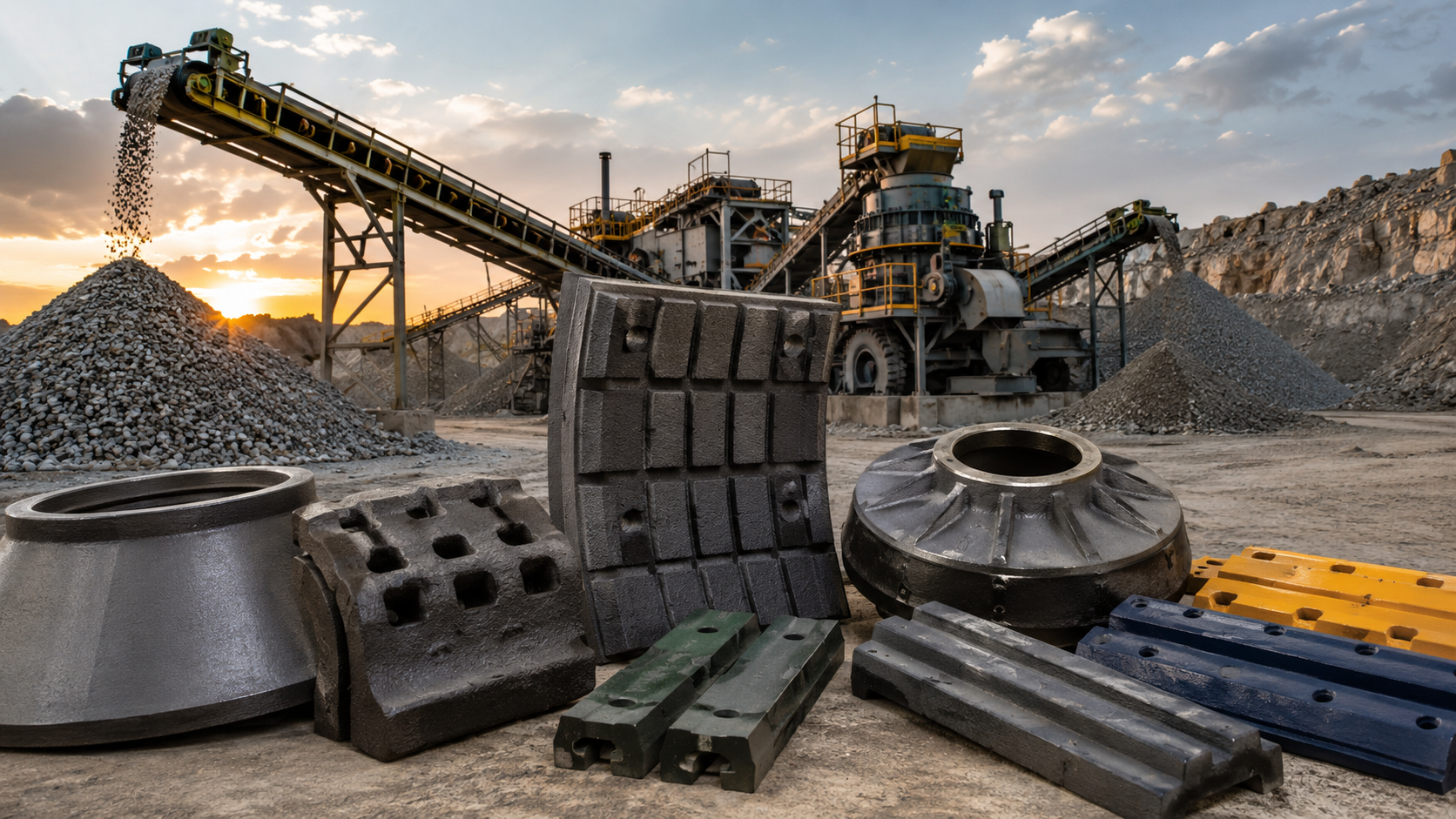
Aggregate industry wear parts help protect crushers, conveyors, washers, and handling systems from abrasive rock, sand, gravel, and high-impact material flow.
Wear parts protect crushers and material-handling systems from abrasive material, helping prevent structural damage and costly repairs. Good aggregate industry wear parts absorb impact, resist abrasion, guide material flow, and help maintain equipment performance. When liners, blow bars, chute liners, washer paddles, or flights wear too quickly, production can drop, product quality can suffer, and shutdowns become more frequent.
The U.S. Geological Survey’s crushed stone statistics show how important crushed stone is to the U.S. construction economy, especially for construction aggregate, road work, and infrastructure-related demand. That means reliable production matters. When aggregate plants lose time to avoidable wear-part failure, the cost is not limited to the replacement part. It affects scheduling, hauling, labor, and customer commitments.
Buyers should not choose aggregate industry wear parts based only on the lowest purchase price. A cheaper part that fails early can cost more than a better part that lasts longer and keeps production stable.
How Rock Hardness Affects Wear Parts
Rock hardness plays a major role in how quickly wear parts break down. Harder rock usually creates faster abrasion, especially when it contains silica or quartz. Softer rock may be less aggressive, but it can still cause wear depending on the application and operating conditions.
In actual aggregate operations, wear is usually seen through the condition of the part rather than a hardness rating alone. Common signs include:
- Polished or shiny metal surfaces
- Deep grooves or uneven wear marks
- Cracking, rounding, or chipping
- Parts wearing thin before the expected service interval
- Faster wear in areas exposed to fines, moisture, or high-speed material flow
For aggregate industry wear parts, the main concern is not only how hard the rock is, but how it wears against the part. Some applications create sliding abrasion, others create heavy impact, and many involve both. That is why a VSI crusher handling abrasive sand and gravel may need a different part design than a jaw crusher processing large, high-impact feed.
Common Rock Types and Their Wear Characteristics
Different rock types create different wear problems, so aggregate industry wear parts should never be selected by material name alone. The sections below show how common aggregate materials affect abrasion, impact, and component life.
Limestone
Limestone is generally softer than granite, basalt, or quartzite. Because of this, it may cause slower wear in many crushing applications. However, limestone can still create problems when it is wet, sticky, or mixed with abrasive fines.
For limestone operations, aggregate industry wear parts should be selected based on the full operating condition, not just the rock name. Chute liners, impact parts, and wash plant components still need to resist steady material contact and maintain proper flow.
Granite
Granite is harder and more abrasive than limestone. It can shorten the wear life quickly if the wrong material is used. Granite often requires stronger abrasion resistance, especially in secondary and tertiary crushing applications.
For granite applications, operators should pay close attention to liners, blow bars, anvils, and rotor-related components. High-chrome wear parts may be useful in applications where abrasion is the main issue and impact is controlled.
Basalt
Basalt is dense, tough, and abrasive. It can create both impact and abrasion challenges, which makes material selection more important. If the part is too brittle, it may crack. If it is too soft, it may wear out too quickly.
Basalt operations often need aggregate industry wear parts that balance hardness and toughness. This is where reviewing the actual crusher type, feed size, and failure pattern becomes critical.
Quartzite
Quartzite is one of the more abrasive materials commonly handled in aggregate production. Its high quartz content can wear parts aggressively, especially in applications with sliding abrasion.
When processing quartzite, plants should expect shorter wear intervals if the wrong parts are used. High-abrasion applications may benefit from high-chrome cast iron or ceramic composite wear components when the impact level allows it.
Sand and Gravel
Sand and gravel may seem less severe than hard rock, but constant abrasion can still wear parts quickly. Washer paddles, flights, chute liners, and transfer-point components are especially exposed.
In these applications, aggregate industry wear parts need to maintain their shape and resist steady surface wear. A small loss of profile can affect material movement and washing performance.
Choosing the Right Material for Aggregate Industry Wear Parts
Material selection is where many operators make mistakes. The hardest material is not always the best material. The cheapest material is rarely the best long-term option. The right choice depends on the equipment, rock type, impact level, abrasion level, and maintenance goals.
Manganese Steel
Best for impact-heavy applications
High-Chrome Cast Iron
Best for controlled-impact abrasion
Ceramic composite parts may be useful when operators need extended wear life in highly abrasive conditions. These parts combine wear-resistant materials to improve performance in the right application.
Dews Foundry supports this type of material-specific approach through its aggregate and mineral crusher parts, including VSI and HSI components such as blow bars, anvils, impellers, rotor shoes, and chute liners. We also offer foundry services that include high-chrome castings, heat treatment, pattern work, machining, fabrication, and grinding.
This matters because aggregate industry wear parts are not only about alloy chemistry. Casting quality, heat treatment, fit, finish, and application review all affect service life.
Key Wear Parts Used in Aggregate Equipment
Aggregate equipment depends on several wear parts to protect critical surfaces, control material flow, and maintain production efficiency. Each component faces a different mix of impact, abrasion, and movement, so material selection should match the part’s specific role.
-
1
Crusher Liners
Crusher liners protect the crushing chamber and help shape the material as it moves through the crusher. Worn liners can reduce efficiency, affect product size, and increase stress on the machine.
-
2
Blow Bars
Blow bars are used in horizontal shaft impact crushers and take repeated impact from the feed material. The right blow bar material depends on feed size, rock hardness, and the amount of impact in the application.
-
3
Anvils and Impellers
Anvils and impellers are common in VSI applications. These parts face constant abrasion and impact as material is accelerated and broken down. Proper material selection helps improve wear life and product consistency.
-
4
Rotor Shoes
Rotor shoes guide and protect material flow inside VSI crushers. Because they are exposed to severe abrasion, they must be selected carefully for the rock type and operating speed.
-
5
Chute Liners
Chute liners protect transfer points from abrasion and impact. They are often overlooked, but worn chute liners can expose the structure underneath and create costly repairs.
-
6
Sand Washer Paddles and Log Washer Flights
Wash plant components experience steady abrasion from sand, gravel, water, and fines. These parts need to maintain their shape to keep the material moving and washing properly.
Each of these aggregate industry wear parts plays a direct role in plant reliability. If one component wears too quickly, it can affect the performance of the entire system.
Maintenance Practices That Extend Wear Life
Even the best wear parts will fail early if they are installed poorly or ignored during operation. Regular inspection is one of the simplest ways to improve performance. Operators should track wear patterns, run hours, tons processed, material type, and any unusual damage.
Useful inspection points include:
- Uneven wear across liners or bars
- Cracking, chipping, or breakage
- Excessive grooves or polishing
- Reduced material flow
- Changes in product size or shape
- Unusual vibration or noise
- Shorter-than-normal service life
Keeping records makes it easier to improve future orders. If a part fails early, photos and operating details help the supplier understand whether the issue is material selection, impact, abrasion, fit, or machine condition.
This is especially important for aggregate industry wear parts in high-abrasion applications. Without wear records, the plant and supplier are both guessing. Guessing is a weak maintenance strategy.
Balancing Cost, Wear Life, and Downtime
The real cost of a wear part is not just the invoice price. Operators should consider purchase cost, installation labor, downtime, service life, machine protection, product quality, and replacement frequency. A cheaper part may save money upfront but may cost more if it wears out faster or causes extra shutdowns. A higher-quality part may cost more at first, but reduce cost per ton over time.
The better goal is predictable wear life. When operators know how long parts will last, they can schedule maintenance instead of reacting to failures. Predictability improves planning, safety, and production efficiency. For this reason, aggregate industry wear parts should be evaluated as production components, not simple consumables. They affect uptime, throughput, and profitability.
Working With the Right Foundry Supplier
Choosing the right supplier is just as important as choosing the right material. A good supplier should understand the application, ask about rock type and operating conditions, and recommend parts based on actual wear behavior.
Dews Foundry is relevant to aggregate producers because our foundry services go beyond basic replacement parts. Its work includes high-chrome white iron castings, ceramic composite parts, pattern development, machining, heat treatment, fabrication, and grinding. These capabilities support customers who need durable aggregate industry wear parts for crushers, wash plants, and material-handling systems.
When working with a supplier, operators should provide:
- Equipment type and model
- Rock type
- Feed size
- Moisture conditions
- Current part material
- Run hours or tons processed
- Photos of worn parts
- Description of failure patterns
The more information the supplier has, the better the recommendation will be.
Choosing Wear Parts That Turn Rock Hardness Into a Production Advantage
Rock hardness directly affects wear-part life, equipment performance, and operating cost. Limestone, granite, basalt, quartzite, sand, and gravel all create different wear conditions, from steady abrasion to heavy impact. Because many aggregate operations deal with both, wear parts should be selected based on the actual material, crusher type, and wear pattern.
The best aggregate industry wear parts help reduce downtime, protect equipment, maintain product quality, and lower cost per ton. Manganese steel may be better for high-impact primary crushing, while high-chrome cast iron can be a stronger fit for abrasion-dominant applications. With the right material selection and a capable foundry partner, wear parts can become a real production advantage instead of just another replacement cost.
Need Wear Parts Built for Abrasive Aggregate Applications?
Dews Foundry produces durable crusher, wash plant, and material-handling wear parts for demanding aggregate operations.
Contact us today
