
How Much Is a CNC Machine? Price Ranges, Ownership Costs, and When to Outsource
CNC machine pricing depends on far more than the equipment itself, with tooling, setup, maintenance, labor, and production volume often deciding whether buying or outsourcing is the smarter move.
Updated September 2026
A CNC machine can cost anywhere from a few thousand dollars for a small desktop router to more than $500,000 for a large industrial machining center. Some specialized systems can reach seven figures once tooling, installation, software, automation, and facility upgrades are included.
That wide range is why “how much is a CNC machine?” is not a simple question. The machine price is only the starting point. The real cost depends on the type of machine, work envelope, material, tolerance requirements, tooling, operator skill, setup time, maintenance, and how often the machine will actually run.
For many industrial buyers, the smarter question is not just “what does a CNC machine cost?” It is: does buying one make financial sense, or should this work be outsourced to a capable machine shop?
At C.L. Dews & Sons Foundry & Machinery, we see this decision from the practical side. We have been casting and machining industrial parts in Hattiesburg, Mississippi, since 1941. Some of the companies we work with need dedicated in-house CNC capacity. Others need accurate industrial parts, repair components, castings, or low-volume production without taking on the cost of a machine, operators, fixtures, inspection tools, and downtime. This guide breaks down real CNC machine costs so you can make a better decision.
CNC Machine Cost by Type
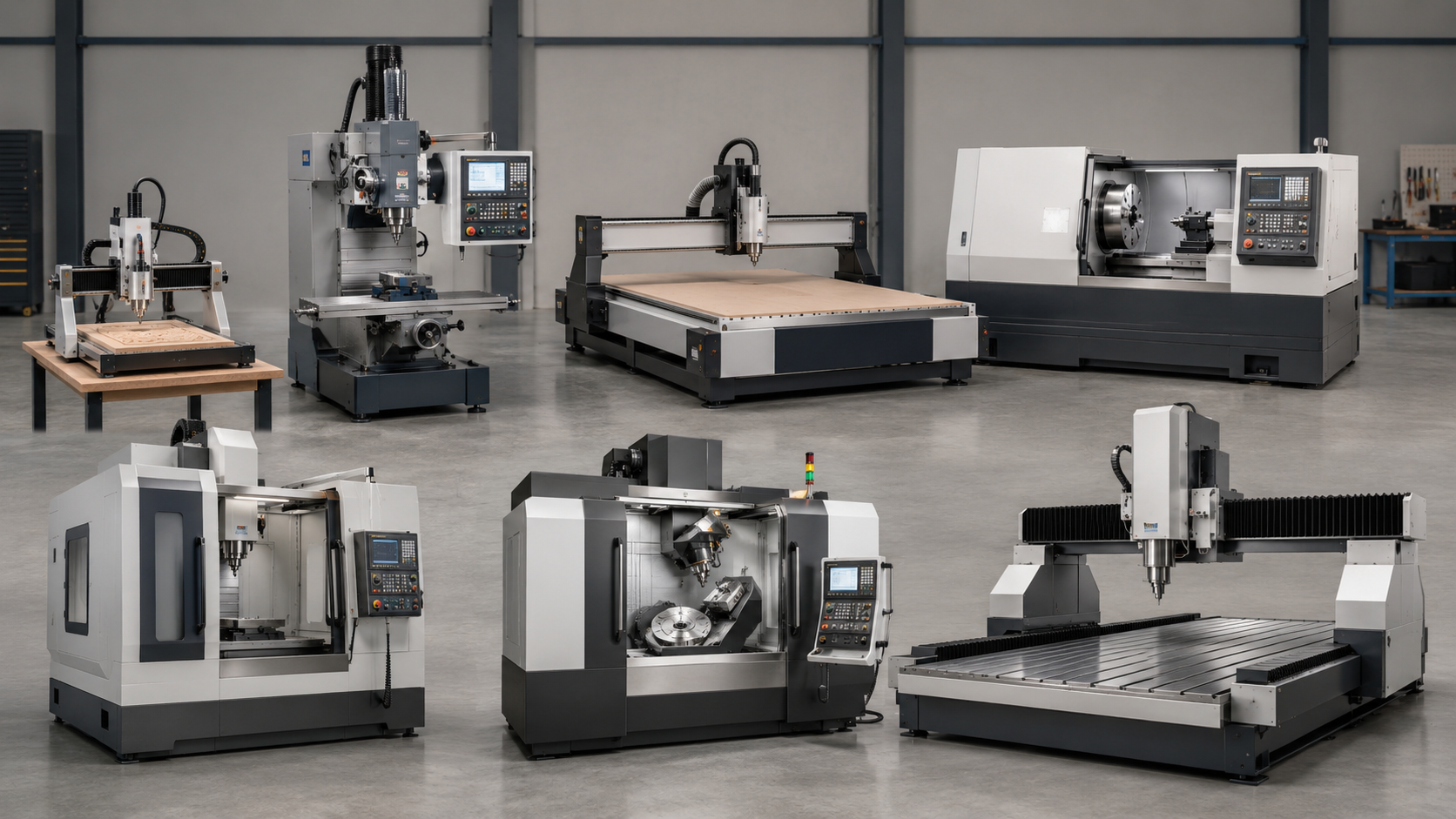
CNC machine costs vary widely by type, from small desktop routers to large industrial machining centers built for heavy-duty production.
The table below gives general price ranges for common CNC machine categories. Actual prices vary by brand, machine size, spindle power, axis count, controller, automation, tooling package, and whether the machine is new or used.
| CNC Machine Type | Typical Price Range | Best Suited For |
|---|---|---|
| Desktop CNC router | $1,000 to $10,000 | Hobby work, light plastics, wood, and soft metals |
| Small CNC mill | $10,000 to $50,000 | Prototyping, small parts, and light production |
| CNC router table | $15,000 to $100,000 | Wood, plastics, aluminum sheet, signage, and panels |
| CNC lathe | $40,000 to $250,000 | Round parts, shafts, bushings, and threaded components |
| Vertical machining center | $50,000 to $250,000 | General milling, drilling, boring, and production parts |
| Horizontal machining center | $150,000 to $500,000+ | Higher-volume production and multi-sided machining |
| 5-axis CNC machine | $150,000 to $500,000+ | Complex contours, aerospace parts, and precision components |
| Large gantry CNC machine | $300,000 to $1,000,000+ | Oversized parts, plate work, and heavy industrial machining |
These ranges are useful for planning, but they are not quote-level numbers. A small 3-axis mill with basic tooling is a very different investment from a fully equipped production cell with probing, coolant management, chip handling, workholding, and automation.
Vertical or Horizontal Machining Center?
The table shows a big jump in price between vertical and horizontal machining centers, and it helps to know why. A vertical machining center holds the spindle upright and cuts down into the part. It takes less floor space, costs less, and is the more common machine, so operators, service technicians, and replacement parts are easier to find.
A horizontal machining center turns the spindle on its side. Chips fall away from the cut instead of piling up on the part, and with a rotary table or pallet changer, one setup can reach several faces. That makes it faster on multi-sided production work, but it is larger and heavier, and it is hard to justify unless there is enough volume to keep it running.
If you are still learning the basics of the process itself, start with our plain-English guide to what CNC machining is. If you already understand the process and are comparing machine types, keep reading.
What Drives the Price of a CNC Machine?
Two CNC machines may look similar from the outside but have completely different price tags. The difference usually comes down to capability, rigidity, precision, and production efficiency.
Machine Size and Work Envelope
The work envelope is the usable cutting area inside the machine. Larger machines cost more because they require more material, stronger frames, larger motors, heavier guideways, and more floor space. A machine built for small aluminum brackets is not built the same way as a machine that can handle heavy castings, large plates, or long shafts.
For industrial parts, size also affects handling. A large workpiece may require cranes, forklifts, custom fixtures, and careful setup planning before cutting even begins.
Number of Axes
A basic 3-axis CNC machine moves along the X, Y, and Z axes. It can handle a large share of common milling, drilling, and pocketing work. More advanced machines add rotary or tilting axes so the tool can reach multiple sides of the part without repeated manual setups.
More axes usually mean a higher machine price, more complex programming, and greater maintenance requirements. The benefit is reduced setup time and better access to complex geometry. For many industrial components, a well-equipped 3-axis machine is enough. For complex contours, tight multi-face features, or aerospace-style geometry, 4-axis or 5-axis machining may be worth the added cost.
For a deeper breakdown, see our guide to 3-axis CNC machining capabilities.
Spindle Power and Rigidity
A machine cutting aluminum all day does not need the same rigidity as a machine removing heavy material from steel, stainless steel, cast iron, or hard alloys. Higher spindle horsepower, stronger castings, better bearings, and heavier machine construction all increase cost.
This matters because chatter, vibration, and deflection can ruin surface finish and dimensional accuracy. A cheap machine may be able to move a cutter through metal, but that does not mean it can hold tolerance in real production conditions.
Controller and Software
The CNC controller is the system that reads the program and controls the machine motion. Higher-end controllers can offer better accuracy, smoother motion, faster processing, tool management, probing support, and integration with automation.
Software also adds cost. CAD/CAM programming, simulation, post-processors, nesting software, tool libraries, and maintenance subscriptions can all affect the total investment.
Tooling and Workholding
The machine is not useful by itself. You also need cutting tools, holders, vises, fixtures, clamps, jaws, probes, inserts, coolant, and inspection equipment. For custom or repeat production work, fixtures can become a major part of the investment.
One of the most common budgeting mistakes is pricing the machine but forgetting the tooling package needed to make accurate parts repeatedly.
Accuracy and Inspection Requirements
Tighter tolerance work requires better machines, better tooling, better temperature control, better inspection, and more experienced operators. If a part must hold critical dimensions, the cost is not only in cutting the part. It is also in proving that the part meets the required specification.
The National Institute of Standards and Technology’s machining research highlights the role of integrated metrology, process monitoring, and machine performance prediction in improving production quality and yield. That is a useful reminder that precision manufacturing depends on more than machine movement. Measurement and process control matter.
The Hidden Costs of Owning a CNC Machine
The sticker price is only part of the investment. A CNC machine can be a strong asset when it is used correctly, but it can become an expensive, underused tool when the full cost is ignored.
| Cost Category | Why It Matters |
|---|---|
| Freight and rigging | Heavy machines require specialized transportation and placement. |
| Installation | Power, air, coolant, leveling, and commissioning may be required. |
| Tooling | Cutters, inserts, holders, probes, vises, and fixtures add up quickly. |
| Software | CAD/CAM licenses, post-processors, and updates can be ongoing costs. |
| Training | Operators and programmers need skills, especially for tight tolerance work. |
| Maintenance | Spindles, way covers, pumps, coolant systems, and electronics need service. |
| Inspection | Calipers are not enough for many precision parts. |
| Floor space | Machines need room for access, material handling, and safe operation. |
| Utilities | Power, compressed air, coolant, and chip management affect operating cost. |
| Scrap and rework | New parts, new operators, and setup mistakes use up material and machine time. |
| Financing | Loan or lease payments continue whether the machine runs or not. |
| Downtime | A machine that is not running still costs money. |
A shop that runs CNC machines every day can spread these costs across many jobs. A company that only needs occasional parts may struggle to justify the same investment.
Work Out the Real Hourly Cost
Before buying, turn the machine into an hourly number. Add up a year of loan or lease payments, operator and programmer wages, tooling, software, maintenance, floor space, and utilities. Then divide by the hours you honestly expect the spindle to be cutting parts, not the hours the shop is open. If the machine will only run a few hours a week, that hourly cost climbs fast and can easily exceed what a machine shop would charge for the same parts.
New vs. Used CNC Machines
Used CNC machines can reduce upfront cost, but they come with risk. A used machine may need service, control upgrades, spindle repair, alignment work, or replacement parts. If the machine has been poorly maintained, the savings can disappear quickly.
A used machine may make sense when:
Maintenance Support Exists
The buyer has experienced maintenance support and understands how to assess machine condition.
Machine History Is Known
Service history, hours, previous use, and known issues are clear before purchase.
Parts Are Available
Replacement components, controller support, and technical service are still accessible.
Repair Budget Exists
The price leaves enough room for repairs, setup, tooling, and possible downtime.
What to Check Before Buying a Used CNC Machine
- Spindle hours and cutting hours, not only power-on hours. A control can log thousands of hours while the spindle sits still.
- Service records, repair invoices, manuals, and the original option list.
- Spindle condition. Run it through its speed range and check for noise, heat, and runout.
- Backlash and wear in the ball screws and ways, checked with an indicator on each axis.
- Controller age, and whether the builder or a third party still supports it.
- A test cut on a part like yours, measured afterward, before any money changes hands.
If nobody on your team can judge these items, pay an independent machine tool technician to inspect the machine. That fee is small next to the cost of a machine that cannot hold tolerance.
A new machine may make more sense when uptime, warranty support, modern controls, and long-term production planning matter.
Do not compare only the purchase price. Compare total cost, expected use, support availability, and the financial impact of downtime.
Need Accurate CNC Machining Without Buying the Machine?
Get industrial parts, repair components, castings, and low-volume production handled by an experienced foundry and machine shop.
Discuss Your Machining NeedsWhen Buying a CNC Machine Makes Sense
Buying a CNC machine can be the right move when the work is frequent, repeatable, and central to your operation. It gives you control over scheduling, process knowledge, and production capacity.
Buying may make sense if you have:
- High repeat volume.
- A stable family of parts.
- Skilled operators or programmers.
- Enough floor space and power.
- Strong internal maintenance support.
- Inspection capability.
- A clear plan to keep the machine busy.
The key phrase is keep the machine busy. A CNC machine sitting idle is not an asset. It is capital tied up in the corner of the shop.
If you have consistent production demand, in-house machining may reduce lead times and give your team more control. But if your work is irregular, oversized, specialized, or repair-based, buying a machine may be overkill.
When Outsourcing CNC Machining Is Smarter
Outsourcing is often the better choice when the part matters, but the machine does not need to live in your building.
One-Off Industrial Parts
Useful when the component is important but does not justify machine ownership.
Repair and Replacement Components
Ideal for worn, damaged, or hard-to-source parts that need practical machining experience.
Low-Volume Production
Suitable when production demand is real but not frequent enough to support in-house equipment.
Oversized or Heavy Parts
Better handled by shops with the right equipment, lifting capability, and setup experience.
Machined Castings
Valuable when cast parts need machining on bores, faces, slots, holes, or mounting surfaces.
Special Setups
Helpful when workholding, sequence, tolerance, and inspection matter more than machine ownership.
This is especially true when the part starts as a casting or fabrication and then needs machining to final size. In that case, the cost is not just machine time. It is understanding material behavior, workholding, machining sequence, and final fit.
We offer CNC machining and precision machine services, including turning, milling, drilling, boring, grinding, and custom component fabrication. For non-standard parts, our custom machining team can work from your drawings, specs, or a worn sample. For many customers, using an established machine shop is more practical than buying a CNC machine for occasional or specialized work.
CNC Machine Cost vs. CNC Machining Cost

A CNC vertical machining center removes material from a metal workpiece, showing how machine type, setup, tooling, and operator skill all affect the true cost of CNC machining.
Machine cost and machining cost are not the same thing, and questions about the cost of CNC often mix the two together.
A CNC machine cost is the price to buy and operate the equipment. CNC machining cost is what you pay to have a part made. That cost may include programming, setup, tooling, material handling, machining time, inspection, and finishing.
For outsourced CNC work, pricing usually depends on:
- Part material.
- Part size and weight.
- Tolerance requirements.
- Quantity.
- Surface finish.
- Number of setups.
- Complexity of the geometry.
- Inspection requirements.
- Whether the part is cast, fabricated, or machined from a billet.
- Delivery timeline.
A simple part with loose tolerances may be inexpensive even on a capable machine. A small part with difficult geometry and tight tolerances may cost more because it takes more programming, fixturing, inspection, and care.
This is why the cheapest hourly machine rate is not always the cheapest finished part. A skilled shop can often reduce total cost by improving setup, machining sequence, tooling, and inspection flow.
How to Lower the Cost of Machined Parts
Whether you buy a machine or send the work out, most of the cost of a machined part is decided on the drawing, before any metal is cut. These changes tend to have the biggest effect:
- Hold tight tolerances only where the part needs them. Mark the critical fits, bores, and sealing faces, and leave the rest at a standard tolerance. Every tight callout adds machining time and inspection.
- Choose the material for the job. Steel, stainless steel, and aluminum machine very differently. Harder materials cut slower and wear tooling faster.
- Cut down the number of setups. Each time a part is flipped and clamped again, it has to be located again. Features that can be reached from one or two sides cost less.
- Call out fine finishes only where they matter. A smooth finish on a surface nobody sees is paid for in extra passes.
- Plan the casting and the machining together. If a part starts as a casting, building the right machining stock and location points into the pattern makes it easier to hold, measure, and finish.
- Batch repeat parts. Programming and setup are paid once per run, so ordering spares with the first batch lowers the cost per part.
That last pair is where a combined foundry and machine shop pays off. At our Hattiesburg facility, the pattern shop, foundry, and machine shop work on the same part under one roof, so the machining plan can shape the pattern before the first pour. Large flat faces on castings and plate can go to our Blanchard grinding equipment, which takes workpieces up to 42 inches in diameter and holds flatness to ±0.001 inch.
Practical Cost Examples
The examples below are general planning scenarios, not formal quotes.
Small Bracket or Plate
A small aluminum or steel bracket may be a good fit for a 3-axis CNC mill. If the geometry is simple and tolerances are open, the job may require basic programming, one setup, and standard tooling. Buying a machine for this type of work only makes sense if you need the part repeatedly or have many similar parts.
Shaft, Bushing, or Round Component
Round components are often suited for CNC turning. Cost depends on material, diameter, length, threading, grooves, surface finish, and tolerance. If the part is used in equipment repair, turnaround and fit may matter more than the cheapest possible price.
Machined Casting
A casting may need machining on mounting faces, bores, bolt patterns, slots, or contact surfaces. This work requires more than generic CNC capacity. The shop needs to understand how to hold the casting, where to remove material, and how the final part will function. This is where a combined foundry and machine shop has a practical advantage. The casting and machining steps can be planned together instead of treated as separate problems.
Heavy Industrial Repair Part
A worn or broken industrial part may not have perfect drawings available. The work may require measuring the old component, understanding the fit, selecting the right repair approach, and machining the replacement or repaired part to function properly. Buying a CNC machine for that type of occasional need rarely makes sense. Working with a shop that handles industrial machining and repair is usually the better path.
How to Decide: Buy or Outsource?
Use this decision table before committing capital to a CNC machine.
| Situation | Better Choice |
|---|---|
| You need high-volume repeat production every week | Buy |
| You need occasional replacement parts | Outsource |
| You have trained CNC operators and programmers | Buy may make sense |
| You do not have CNC staff | Outsource |
| You need one heavy casting machined | Outsource |
| You need full control over daily production | Buy |
| You need specialized equipment for a few jobs per year | Outsource |
| You need complex custom or non-standard parts | Outsource to a capable shop |
| You already have inspection and maintenance support | Buy may make sense |
| You are unsure how often the machine will run | Outsource first |
A smart middle path is to outsource first, study your real part demand, then decide whether in-house equipment is justified. For a new part, a prototype machining run lets you prove the design before committing to production or equipment. That prevents buying a machine based on a guess.
CNC Machine Cost FAQ
What is the average price of a CNC machine?
There is no useful single average because the range is so wide. For industrial metalworking, most buyers are comparing a CNC lathe or vertical machining center, which typically falls between $40,000 and $250,000 before tooling and installation. Desktop routers sit far below that range, and horizontal, 5-axis, and gantry machines sit well above it.
Is owning a CNC machine profitable?
It can be, when the machine stays busy on paying work. Profit depends on how many hours it actually cuts, the rate you can charge or the outside cost you avoid, and whether your people can program, set up, and inspect without scrapping parts. Run the hourly cost math above before buying. A machine that sits idle most of the week rarely pays for itself.
Is CNC difficult to learn?
Running a machine that is already programmed and set up can be learned fairly quickly. Writing programs, building fixtures, choosing tools and feeds, and holding tight tolerances on hard metals takes years of shop floor experience. That skill gap is one of the real costs of ownership, and it is a common reason companies send precision work to an established machine shop.
Final Answer: How Much Should You Expect to Spend?
For general planning, expect small CNC machines to start in the low thousands, professional machines to land in the tens of thousands, and industrial CNC equipment to commonly reach six figures. Larger, more advanced, automated, or multi-axis systems can cost several hundred thousand dollars or more.
But the purchase price is only part of the decision. Tooling, software, setup, operators, maintenance, inspection, downtime, and floor space can make ownership far more expensive than the machine quote suggests.
If CNC machining is part of your daily production, buying a machine may be the right investment. If you need low-volume parts, repair components, machined castings, heavy industrial parts, or specialized work, outsourcing is often the smarter and less risky option.
The best decision is not the cheapest machine. It is the option that gives you accurate parts, dependable turnaround, and the lowest total cost for the work you actually need.
Need CNC Machining for Industrial Parts or Castings?
Work with C.L. Dews & Sons Foundry & Machinery for precision machining, component repair, custom fabrication, and foundry-backed industrial support.
Request CNC Machining Support
