
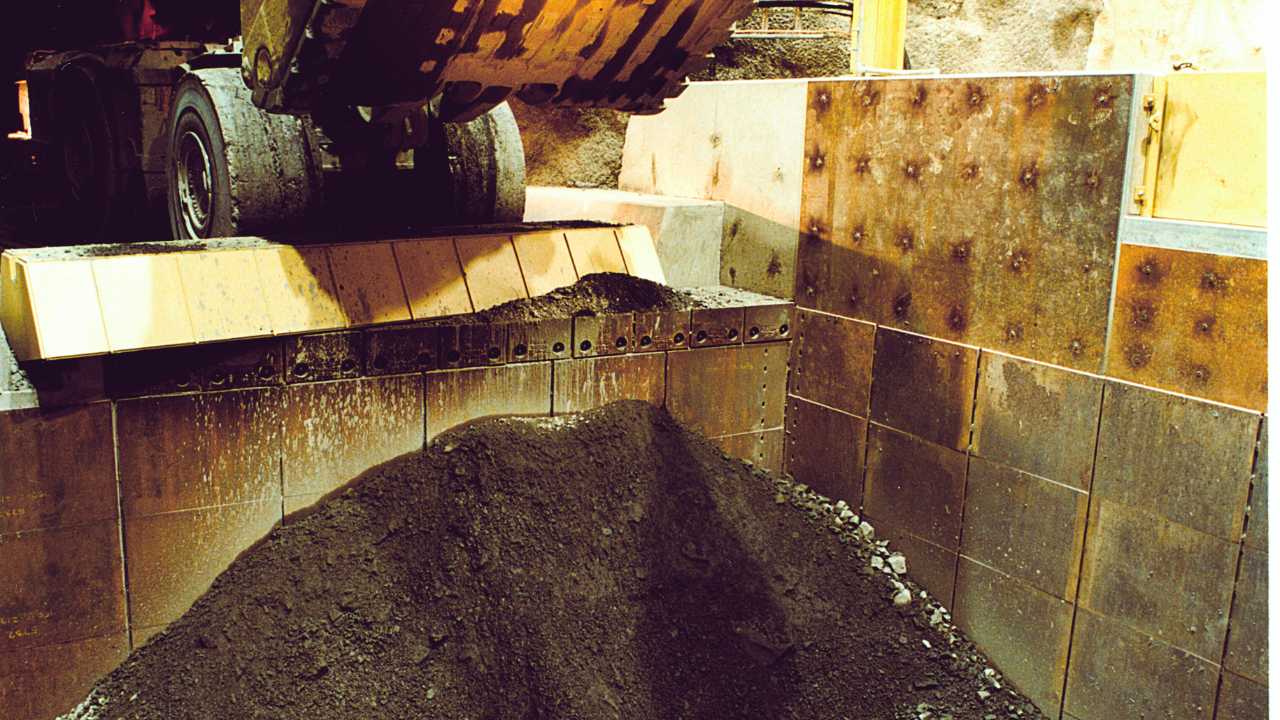
Crusher Wear Parts Cost-Per-Ton: Mastering the True Metric for Profitability
Purchase price is a decoy. The metric that actually determines whether your crushing operation is profitable — or hemorrhaging money — is Cost-Per-Ton.
In This Guide
Beyond Purchase Price: Why Cost-Per-Ton Is Your True Profit Driver
In the demanding world of mining, quarrying, and aggregates production, the profitability of any operation hinges on a delicate balance of throughput, efficiency, and cost management. While the purchase price of machinery often commands attention, a more fundamental metric dictates the true financial health of your crushing operations: Cost-Per-Ton (CPT) for wear parts.
The global crusher wear parts market is a significant economic force, estimated at $5 billion in 2024 and projected to reach $7 billion by 2029 at approximately 6% CAGR. Within the broader Crusher Parts and Accessories Market, wear parts alone capture a substantial 43.7% of overall demand — underscoring their critical impact on operational expenses and overall performance.
The Misconception of Upfront Costs
A common pitfall is focusing solely on the initial purchase price of wear parts. A lower upfront cost might seem appealing, but it often masks a higher long-term expense. Inferior materials, less robust designs, or parts that require more frequent replacement can lead to significantly higher operational expenditures over time. This myopic view fails to account for the true cost of ownership, ultimately eroding profitability. Unplanned downtime — often exacerbated by premature wear part failures — can cost companies nearly $50 billion annually across all industrial manufacturers, with specific costs in industrial sectors averaging $125,000 per hour.
Low Initial Cost → High True Cost
- Appealing unit price at purchase
- Faster wear rate increases replacement frequency
- More shutdowns = more downtime cost exposure
- Secondary damage risk to crusher frame
- Higher real cost-per-ton at end of lifecycle
Higher Quality → Lower True Cost
- Higher unit price at purchase
- Longer wear life extends replacement intervals
- Fewer shutdowns = reduced downtime exposure
- Consistent performance preserves crusher components
- Lower real cost-per-ton across the full lifecycle

Focusing on total Cost-Per-Ton rather than initial purchase price leads to greater long-term profitability by maximizing uptime and processed tonnage.
Deconstructing Cost-Per-Ton: The Formula for True Wear Part Value
The Core Formula
CPT = Total Wear Part Cost ÷ Total Tonnage Processed
Total Wear Part Cost includes:
Initial purchase price + freight charges + labor for installation and removal
Total Tonnage Processed is:
Cumulative material (in tons) processed from installation until replacement
Why CPT Outperforms Simple Wear Life Metrics
While wear life in terms of hours or tons is a useful indicator, it doesn't tell the whole story. A part that lasts longer but results in lower throughput, increased energy consumption, or damage to other crusher components may still have a higher CPT. CPT accounts for these indirect costs, providing a holistic view by considering the material being processed, the specific operational context of the crusher, and the total economic impact — rather than a single performance parameter.
For crushing equipment like jaw crushers and cone crushers, this metric is invaluable for making informed decisions that actually improve the bottom line.
Key Factors Influencing Your Crusher Wear Part CPT
Wear Part Material Science & Design
Advanced material science — such as high-manganese steel alloys with controlled pouring temperatures of 1,480–1,520°C — can significantly extend wear life. Part design tailored to the specific crusher type and application also plays a vital role in wear resistance and performance.
Crusher Operation & Settings
How your crusher is operated profoundly impacts wear rates. Techniques like choke feeding — ensuring the crushing cavity is consistently full — help distribute wear more evenly. Optimizing settings, cavity design, and maintaining consistent operational parameters prevents premature wear and maximizes component lifespan.
Maintenance Practices
Proactive maintenance is a cornerstone of CPT optimization. Regular wear liner checks, timely flipping or rotation of parts for even wear, and adherence to manufacturer specs are essential. Consistent monitoring — including oil analysis and suspension strut integrity — contributes to overall wear part longevity.
Supply Chain & Inventory Management
An efficient supply chain and effective inventory management are critical to minimizing downtime. Having the right wear parts available when needed prevents prolonged outages. Stockouts can force the use of suboptimal replacements or lead to extended periods of reduced production — directly increasing CPT for the entire operational cycle.
Neglecting maintenance can lead to accelerated wear, damage to the main crusher frame, and escalating operational costs. The cost of a disciplined maintenance schedule is always lower than the cost of the unplanned downtime it prevents.
Leveraging Technology for Predictive Wear Part Management
Digitalization & Data Collection
Sensors and IoT devices provide real-time data on crusher performance, vibration, temperature, and material flow. This data, aggregated on cloud platforms, forms the essential foundation for advanced analysis and informed wear part management.
Advanced Analytics & Machine Learning
Machine learning algorithms can predict wear patterns with remarkable accuracy — forecasting when specific parts are likely to require replacement and identifying subtle operational anomalies that might accelerate wear before they become costly failures.
Automation & Self-Adjustment
Automated systems can fine-tune crusher settings in real time based on wear data — maintaining optimal performance and wear distribution, reducing reliance on manual adjustments, and delivering a more stable, predictable CPT.
Performance-Based Supplier Schemes
Some suppliers offer lifecycle services and performance-based arrangements that align supplier goals directly with your CPT objectives — taking on greater responsibility for wear part performance and proactive maintenance.
Strategic Sourcing & Supplier Partnerships: Beyond the Price Tag
The choice of wear part supplier significantly influences your CPT. Strategic sourcing and strong partnerships yield benefits far beyond competitive pricing alone.
Supplier Quality Evaluation
Assess material and manufacturing quality, engineering support capabilities, and supply chain reliability. Suppliers with global quality control standards and a track record of consistent high-performance parts are more likely to contribute to a lower CPT.
Look beyond the quoted priceLong-Term Partnership Value
Cultivating long-term relationships with trusted suppliers fosters collaboration that enables a deeper understanding of your specific operational needs — leading to joint efforts to optimize wear part performance and tailored solutions.
Shared operational knowledge compounds over timeCollaborative Inventory Optimization
Collaborative inventory management ensures critical wear parts are readily available without the burden of excessive on-site stock — minimizing stockout risk while optimizing capital tied up in inventory.
Right part, right time, right quantityImplementing a CPT Mindset: Continuous Improvement for Profitability
Establish Your Baseline CPT
Meticulously track the cost of each wear part and the total tonnage it processes. This baseline provides the benchmark against which every future improvement is measured — you cannot manage what you haven't measured.
Identify CPT Reduction Strategies
Strategies flow directly from understanding the key influencing factors: higher-quality materials, optimized crusher operations, rigorous maintenance schedules, strategic supplier selection, and data analytics to identify areas of inefficiency.
Monitor, Adjust, and Repeat
CPT management is a cyclical process. Regularly monitor performance, analyze deviations from baseline, and adjust strategies accordingly. This continuous feedback loop ensures operations remain optimized and that you are consistently working toward lower costs per ton.
Capture Broader Sustainability Gains
Optimized CPT not only boosts profitability — it contributes to sustainability goals. Reduced wear part consumption means less material waste, aligning with recycling and circular economy principles. Improved operational efficiency also delivers lower energy consumption per ton.
Mastering Your Crusher Wear Parts CPT for Sustainable Profitability
The journey from focusing on simple purchase prices to mastering the Cost-Per-Ton metric is transformative for any operation in the mining, quarrying, and aggregates sectors. By understanding the core calculation, identifying the key factors that influence it, and embracing technological advancements, businesses can move beyond short-term cost savings to achieve sustainable, long-term profitability.
This strategic shift empowers operators to make informed decisions, optimize operational efficiency, and gain a significant competitive advantage. Mastering CPT is the definitive rule for unlocking true profitability in your crushing operations.
Ready to Lower Your Cost-Per-Ton?
Dews Foundry's wear parts are engineered for maximum tonnage and minimum replacement frequency — built to drive your CPT down.
Explore Our Crusher Wear Parts →
