
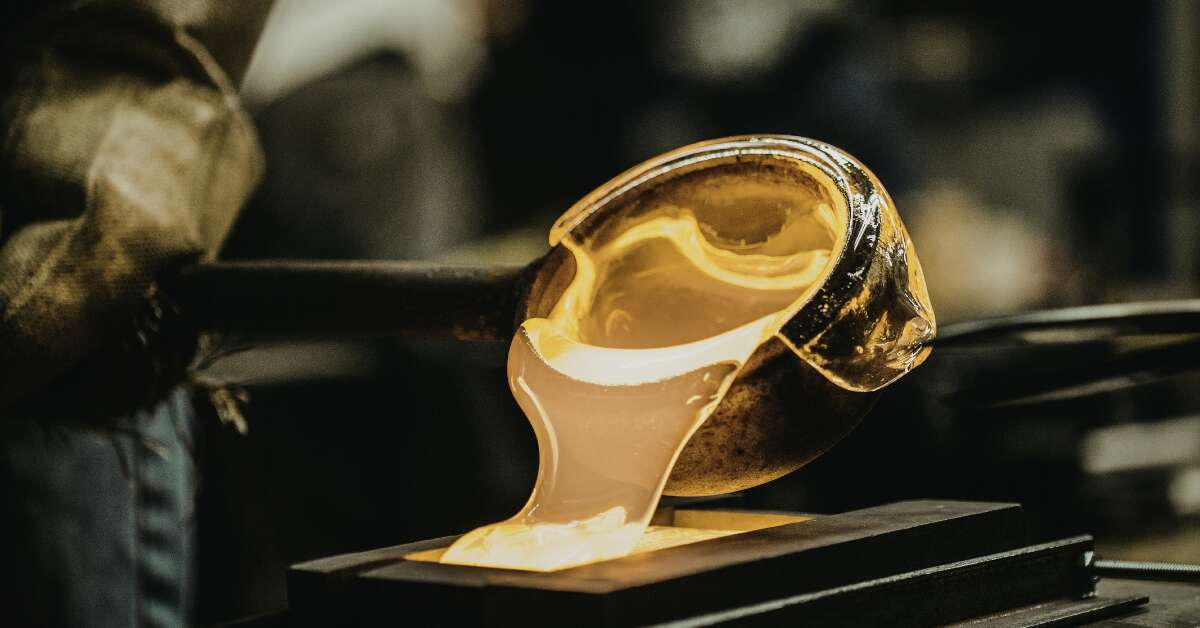
Quality Foundry Secrets: Essential Casting Inspection Methods
Prevent shipping defects through proactive quality control—from raw materials to final inspection
Introduction: Beyond Detection – The Secret to Flawless Castings
The foundation of any robust manufacturing process lies in the quality of its components. For metal casting, a process that has shaped industries for millennia and remains vital today, achieving flawless results is paramount. The global metal casting market was valued at USD 177.28 billion in 2024 and is projected to reach USD 325.69 billion by 2033, exhibiting a CAGR of 6.94% from 2025-2033, according to IMARC Group. This significant economic footprint underscores the critical importance of ensuring every casting meets stringent quality standards. Shipping defective castings is not merely an inconvenience; it translates to costly rework, reputational damage, and compromised product performance. This article delves into the often-guarded secrets of effective casting inspection, shifting the focus from mere detection to proactive prevention, ensuring that every piece leaving the foundry is of the highest caliber.
The Cost of Defects: Why Prevention is Paramount
The economic impact of casting defects can be staggering. From internal voids and porosity to surface imperfections and dimensional inaccuracies, these flaws can fundamentally undermine a casting's intended mechanical properties and functionality. Producing defective parts leads directly to increased scrap rates, expensive rework, and significant warranty claims. The iron and steel casting market alone is valued at USD 156.7 billion in 2025 and is projected to grow at a CAGR of 6.6% to reach USD 278.5 billion by 2034, according to Research and Markets. The metal casting market size is forecast to increase by USD 22.85 billion at a CAGR of 8.7% between 2024 and 2029, demonstrating the sheer volume of production and thus the potential for widespread defect issues, as noted by Technavio. These statistics highlight that even a small percentage of defects can translate into substantial financial losses. Beyond direct costs, the erosion of customer trust and damage to a foundry's reputation can have long-term, detrimental effects.
Shifting the Paradigm: From Reactive to Proactive Inspection

Historically, quality control in foundries often focused on inspecting finished products to identify defects. This reactive approach, while necessary, is inherently inefficient. The true secret to flawless castings lies in shifting this paradigm. Instead of solely detecting flaws, the focus must move towards preventing their formation in the first place. This proactive strategy integrates quality considerations throughout the entire casting process, from the initial design phase to the final solidification. By understanding the root causes of common casting defects and implementing rigorous controls at every stage, foundries can significantly minimize the likelihood of producing subpar parts. This philosophy embraces the idea that quality is built-in, not inspected-in.
Eliminate defects before molten metal even fills the mold
The most effective way to prevent shipping defects is to eliminate the possibility of their occurrence before the molten metal even fills the mold. This foundational secret emphasizes meticulous control over the upstream elements of the casting process.
High-quality materials with controlled chemical composition. Rigorous incoming inspection and strict alloy specifications.
Advanced software predicts metal flow, identifies hot spots, and optimizes gating and risering systems.
Real-time temperature control, turbulence minimization, and degassing to remove unwanted gases.
Raw Material Purity: The First Line of Defense
The integrity of the final casting is intrinsically linked to the purity of its constituent materials. Using high-quality raw materials, whether virgin metals or recycled feedstocks, is crucial. In 2024, over 65 percent of European metal casting facilities reported using recycled materials as their primary feedstock, aligning with EU Green Deal policies, according to Grand View Research. While sustainability is key, the chemical composition and cleanliness of these materials are paramount. Contaminants, excessive trace elements, or an inconsistent alloy composition can lead to a host of defects during solidification, including inclusions, porosity, and undesirable microstructural phases that degrade mechanical properties. Rigorous incoming material inspection and strict adherence to alloy specifications are non-negotiable.
Masterful Mold Design & Process Simulation
The mold is the heart of the casting process, dictating the shape and influencing the cooling dynamics of the molten metal. Superior mold design is essential for controlling the flow of metal, managing solidification patterns, and minimizing stress concentrations. Advanced simulation software plays a vital role here, allowing engineers to model the entire casting process. This includes predicting metal flow, identifying potential hot spots, optimizing gating and risering systems, and anticipating the formation of defects like shrinkage and voids. Understanding how the specific alloy will behave during cooling within the mold allows for design modifications that preemptively address these issues. A well-designed mold, validated by simulation, is a critical step in preventing defects.
Molten Metal Monitoring: Real-time Quality Assurance
The state of molten metal just before and during pouring is a critical factor in casting quality. Temperature, turbulence, and dissolved gases can all contribute to defects. Precise temperature control ensures the metal has the correct fluidity to fill the mold completely without premature solidification or excessive heat loss, which can lead to misruns or cold shuts. Minimizing turbulence during pouring prevents the entrapment of air or oxides, common causes of porosity and inclusions. Degassing processes remove unwanted gases like hydrogen, which can lead to widespread porosity. Real-time monitoring and precise control of these parameters are essential for producing sound castings consistently.
First line of detection after casting formation
While prevention is ideal, effective inspection methods are vital for validating quality and identifying any defects that may have slipped through the proactive controls. Visual and surface inspection techniques are the first line of detection after the casting is formed.
The Power of Trained Visual Inspection
Visual inspection remains one of the most fundamental and cost-effective inspection methods. However, its efficacy hinges entirely on the skill and training of the inspector. A trained eye can detect a wide array of surface defects, including cracks, pores, inclusions, cold shuts, misruns, and surface irregularities like scale or uneven texture. This method is particularly crucial for identifying cosmetic flaws that, while not always structural, can impact customer acceptance and product aesthetics. Consistent lighting, clean casting surfaces, and standardized inspection protocols significantly improve the reliability of visual inspection.
A liquid dye is applied to the casting surface, drawn into surface-breaking defects by capillary action. After excess penetrant is removed, a developer is applied that draws the penetrant back out, creating a visible indication that reveals the defect's location and extent. LPT is effective on both ferrous and non-ferrous metals.
For ferrous castings (iron, steel), MPI is highly effective. The casting is magnetized, and fine magnetic particles are applied. Defects disrupt the magnetic field, causing particles to cluster at the flaw location, creating a visible indication. MPI is sensitive for detecting surface and near-surface flaws.
Liquid Penetrant Testing (LPT): Revealing Surface Flaws
Liquid Penetrant Testing (LPT), also known as dye penetrant inspection, is a versatile non-destructive testing method used to detect surface-breaking defects. A liquid dye is applied to the casting surface and is drawn into any cracks, pores, or other surface discontinuities by capillary action. After a specific dwell time, the excess penetrant is removed, and a developer is applied. The developer draws the penetrant back out of the defects, creating a visible indication that reveals the defect's location and extent. LPT is widely used because it can be applied to both ferrous and non-ferrous metals with various geometries.
Magnetic Particle Inspection (MPI): For Ferrous Castings
For ferrous castings (iron and steel), Magnetic Particle Inspection (MPI) is a highly effective method for detecting surface and near-surface defects. The casting is first magnetized, and fine magnetic particles (dry or suspended in a liquid) are applied to the surface. Surface or near-surface defects disrupt the magnetic field lines, causing the particles to cluster at the flaw location and form a visible indication, pinpointing the defect. MPI is a sensitive technique for detecting surface and subsurface flaws that could compromise the structural integrity of ferrous castings.
Ensuring critical dimensions for fit and function
Beyond surface integrity, the precise dimensions and geometric accuracy of a casting are critical for its intended function and for ensuring it fits correctly into assembled components.
Ensuring Dimensional Accuracy and Fit
Dimensional inspection verifies that the casting meets the specified tolerances for length, width, height, diameter, and angles. Inaccurate dimensions can lead to problems with assembly, interference with other parts, or improper load distribution. Advanced metrology tools are essential for this task. The Coordinate Measuring Machine (CMM) is a prime example, offering highly accurate, three-dimensional measurement of complex geometries. CMMs can probe numerous points on a casting, capturing detailed dimensional data and comparing it against the digital model or blueprint. This ensures not only that critical dimensions are correct but also that the overall form and profile of the casting adhere to design specifications.
Coordinate Measuring Machines can probe numerous points on a casting, capturing detailed 3D dimensional data and comparing it against digital models to ensure critical dimensions and overall form adhere to design specifications.
Non-destructive testing for hidden defects
Many casting defects, such as porosity, voids, and internal inclusions, are hidden from view and cannot be detected by surface inspection methods. Non-destructive testing techniques are vital for probing the internal structure of a casting.
Reveals internal voids, porosity, inclusions, and cracks by analyzing radiation absorption differences.
High-frequency sound waves detect internal flaws and measure material thickness through echo analysis.
Microscopic examination reveals grain size, phase distribution, and root causes of defects.
Radiographic Inspection (X-ray Inspection): Seeing the Unseen
Radiographic inspection, commonly known as X-ray inspection, utilizes X-rays or gamma rays to examine the internal structure of a casting. The radiation passes through the casting, and the amount absorbed or transmitted varies depending on the density of the material and the presence of internal discontinuities. Defects like voids, porosity, inclusions, and cracks absorb or transmit radiation differently than the surrounding metal, creating visible anomalies on an X-ray film or digital detector. X-ray casting inspection is crucial for revealing internal flaws that would otherwise go undetected until failure.
Ultrasonic Testing (UT): Sound Waves for Sound Castings
Ultrasonic Testing (UT) employs high-frequency sound waves to detect internal flaws and measure material thickness. A transducer emits sound pulses into the casting. These pulses travel through the material and reflect off any internal discontinuities or the back surface. The reflected waves, or echoes, are received by the transducer and analyzed. The time it takes for the echo to return and its amplitude provide information about the location, size, and nature of the flaw. UT is effective for detecting internal cracks, voids, and inclusions, and it can also be used for thickness gauging of the casting walls.
Metallographic Testing: Unlocking Microstructure Secrets
While often considered a destructive test (as it involves preparing a sample for microscopic examination), metallographic testing is invaluable for understanding the root causes of casting defects. It involves preparing a polished and etched cross-section of the casting to reveal its microstructure. This allows for the examination of grain size, phase distribution, the presence of inclusions, and the nature of porosity. By understanding the microstructure, metallurgists can correlate observed defects with specific casting processes, alloy compositions, or heat treatments, providing critical feedback for process improvement and ensuring desired mechanical properties.
Data-driven continuous improvement across the entire lifecycle
The ultimate secret to preventing shipping defects is not in relying on any single inspection method but in adopting an integrated, data-driven approach that spans the entire casting lifecycle.
Tailored Inspection Plans for Specific Casting Types
No single inspection protocol is universally applicable. The selection and combination of inspection methods must be tailored to the specific casting, its intended application, the material alloy, and the known defect susceptibilities of the casting process. For instance, a critical aerospace component will demand a more rigorous and comprehensive inspection regime than a less critical industrial part. Understanding the risks associated with specific defects, like shrinkage in heavy sections or surface porosity on sealing faces, allows for the strategic deployment of the most effective inspection techniques. For example, by application, the automotive sector held 61.73% of the die casting market share in 2025, and this demanding industry requires stringent quality control, according to Mordor Intelligence.
Leveraging Data for Continuous Process Improvement
Inspection is not an endpoint; it's a critical data-gathering activity. The data generated from visual inspections, NDT methods, and dimensional checks must be systematically collected, analyzed, and acted upon. This involves establishing feedback loops where inspection results inform adjustments to raw material sourcing, mold design parameters, melting practices, pouring temperatures, and cooling strategies. By trending defect types, frequencies, and locations, foundries can identify systemic issues and implement targeted process improvements. This data-driven approach moves beyond simply finding defects to actively preventing their recurrence, fostering a culture of continuous improvement.
Inspection methods matched to specific casting types, applications, and known defect risks.
Inspection results inform adjustments to materials, design, melting, and cooling strategies.
AI-powered inspection, phased array ultrasonics, and integrated digital quality systems.
The Role of Advanced Technologies in Future-Proofing Quality
The field of inspection technology is constantly evolving. Advanced techniques, such as automated eddy current testing, phased array ultrasonics, and artificial intelligence-powered visual inspection systems, offer greater speed, accuracy, and sensitivity. Furthermore, the integration of these technologies with digital quality management systems and manufacturing execution systems (MES) allows for real-time data capture, analysis, and control. These advancements enable foundries to not only meet current quality demands but also to future-proof their operations against increasingly stringent industry standards and customer expectations.
Conclusion: The Unbreakable Link Between Inspection and Success
Achieving consistently flawless castings is not a matter of luck; it is the direct result of a deliberate, integrated quality strategy. The secrets to preventing shipping defects lie in a proactive mindset that prioritizes quality at every stage, from raw material selection and mold design to molten metal control and precise solidification.
When defects do arise, a robust suite of inspection methods – encompassing visual, surface, dimensional, and internal integrity tests – provides the essential validation. However, the true power lies in harnessing the data generated by these inspections to drive continuous process improvement.
By embracing a holistic approach that combines preventative measures with intelligent detection and data-driven optimization, foundries can solidify their reputation for excellence, ensuring that every casting shipped meets the highest standards of quality and reliability, thereby securing their success in a competitive global market.

